August 3, 2026
Colorist Spotlight: Inside the Scope
Chisco Arce is a Costa Rican colorist, editor and post-production artist whose work spans feature films, documentaries, television series, commercials and independent productions across Latin America and, more recently, the Middle East.
With a background that bridges both the creative and technical sides of filmmaking, he sees color grading as a collaborative process; one that respects the cinematographer's vision, serves the story, and gives every project its own unique visual identity.
For Chisco, color isn't about creating a signature style. It's about helping every story find its own voice.

For Chisco, color grading is never about creating a signature look. It's about discovering what each story needs and helping filmmakers bring that vision to life.
Having worked as a colorist, editor, cinematographer and post-production artist, he understands the filmmaking process from multiple perspectives. That broad experience allows him to communicate naturally with directors and cinematographers, discussing both creative intent and technical execution throughout the grading process.
"After working in different departments, it's easier for me to talk with the DP, the director, or the people who have the final artistic decision. We can discuss both the creative and technical aspects of a shot, a scene or an entire film to find the best approach for the final product."
Chisco's path into color grading was shaped by his love of cinema and photography. With a degree in Fine Arts, he was drawn to both long before he entered the color suite. That artistic background continues to shape the way he sees images today: every frame is not just footage to correct, but an image that helps tell the story.
"For me, when I work in the color room, it's like I have an unfinished painting. The main difference is that it isn't my painting; it's the work of a collective."
That collaborative mindset is what continues to inspire him. Rather than imposing his own style, he enjoys working alongside filmmakers, using color to support the story, strengthen emotion, and help audiences connect with what's on screen. Whether grading a feature film, short film or documentary, Chisco believes every project deserves its own visual identity.
"I don't like when different movies start looking the same every time."
Instead, his approach is guided by the script, the cinematographer's intent and the mood of the story, creating images that feel authentic to each film rather than following trends. For Chisco, color is never just about making a shot look beautiful. It's about the story.
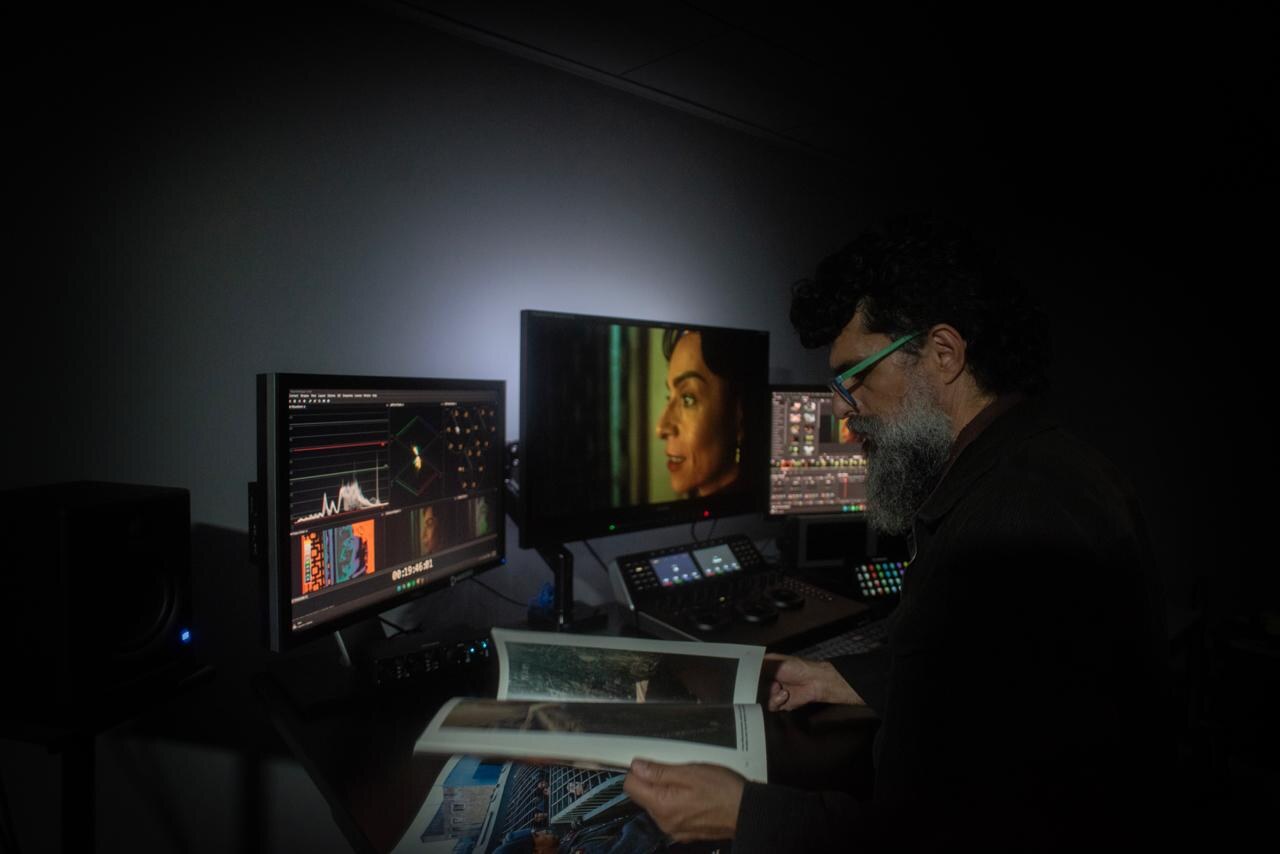
Ask Chisco about a recent project he's most proud of, and he doesn't mention the biggest production or the largest budget. Instead, he mentions EVA, an independent feature from a Honduran filmmaker. For him, what made the project special wasn't its scale; it was how closely color became part of the storytelling.
Working closely with director William Reyes, Chisco studied both the screenplay and the final edit before developing a color palette that evolved alongside the characters. The film opens with natural, warmer tones before gradually shifting towards cooler, desaturated blues and greens as the story grows darker. By the final act, the image returns to a warmer, more balanced palette, reflecting hope and renewal.
For Chisco, projects like EVA demonstrate how color can guide an audience's emotional experience without ever drawing attention to itself.
On a recent high-budget episodic series set in the Middle East, Zaman Al Ajjaj, he collaborated with the cinematographer from pre-production to design an efficient color workflow that could keep pace with a more demanding schedule. Working with the visual effects team, they established a distinct look early in the process and used monitoring tools to ensure consistency throughout production.
His documentary work has also had a profound influence on his development as a colorist. Unlike narrative productions, documentaries often take years of filming, multiple camera systems and constantly evolving stories, making visual consistency one of the biggest creative challenges.
One project that exemplifies this was Guián, a documentary directed by Nicole Chi. Filmed over five years on a Canon 5D Mark II across China and Costa Rica, the project required a carefully developed color palette that unified footage captured across different locations and time periods while preserving the distinct identity of each place.
"We developed a look that brought all the footage together, making the two countries feel distinct, yet part of the same documentary world."
For Chisco, projects like Guián highlight the collaborative nature of documentary filmmaking. As stories evolve during production and continue to change in the edit, the colorist's role is to bring those visual differences into a cohesive whole while staying faithful to the director's vision.
Regardless of genre, every project offers a new opportunity to learn. Every cinematographer brings a different visual language, and every production requires its own way of working. Strong communication across departments, he believes, is just as important as technical skill.
"First of all, understand the story, the mood and the intention of the team behind the work. With all this you always have a good starting point."
Like many colorists, Chisco's grading environment has evolved alongside his career.
He began in a small room with a standard PC monitor, learning through books, experimentation and conversations with other professionals. As his understanding of color science and post-production grew, so did his confidence to take on more ambitious work.
Today, his primary grading platform is DaVinci Resolve, paired with an HP workstation and a Flanders Scientific XMP310 reference monitor. Interestingly, his very first professional grading display was also a Flanders Scientific monitor; one he still owns today.
His workspace also includes dual Dell displays (U2410) for the Resolve interface and Presonus studio monitors for audio monitoring. For creative look development he frequently relies on Mononodes DCTLs, open-source tools and experimental plugins.
But when it comes to evaluating the technical quality of an image, one application is always open.
"For monitoring the technical aspects of the image, I trust OmniScope a lot."
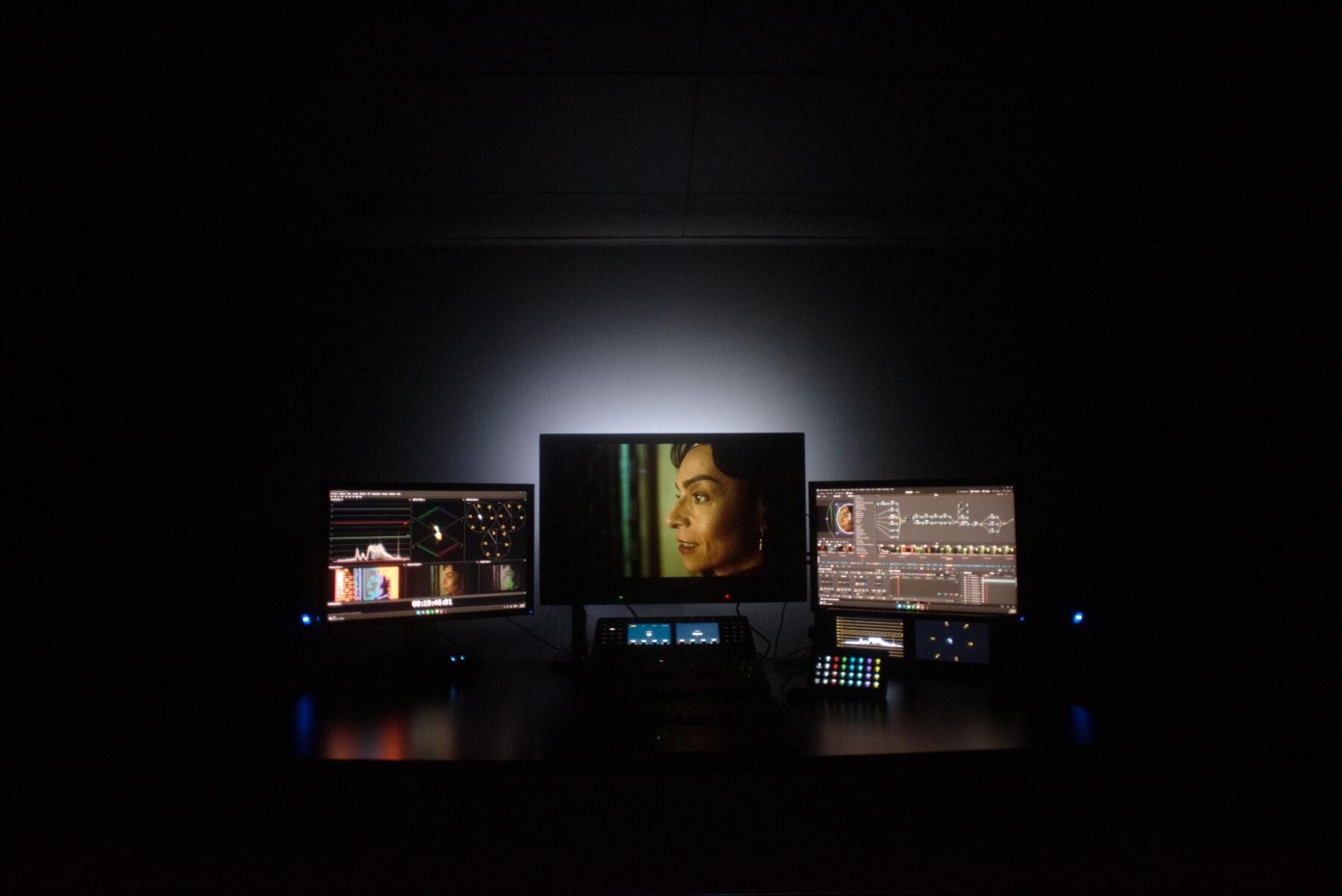
For Chisco, scopes aren't simply measurement tools; they're another way of seeing the image clearly.
"The scopes are the third eye. The fourth is the monitor."
Before making any creative decisions, he first evaluates exposure and color balance, ensuring the cinematographer's lighting decisions are respected throughout the project. Only after establishing that technical foundation does he begin refining contrast, matching shots and developing the final look.
Watching scenes in context is equally important. Rather than grading individual shots in isolation, he prefers to review the entire sequence first, identifying inconsistencies while keeping the emotional flow of the story intact.
That combination of objective analysis and creative judgment sits at the center of his workflow. Technical accuracy isn't the final goal; it's the foundation that allows the creative vision to succeed.
For Chisco, the balance between the technical and the creative isn't something to choose between. It's where the best color grading happens.
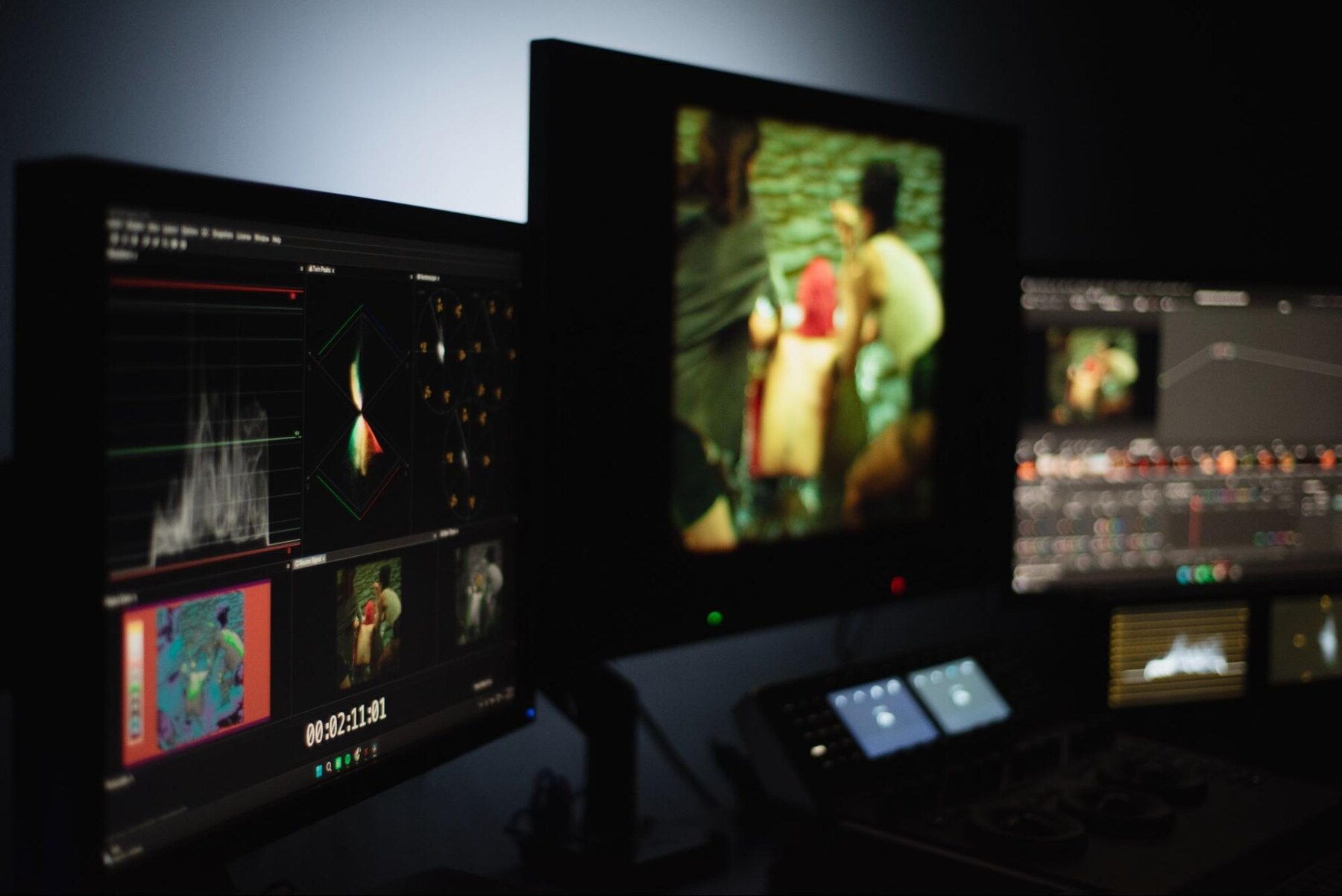
"The first time I heard about Nobe OmniScope was talking with other colorists and seeing how they used it in their workflow. I tested it and loved it."
Today, OmniScope is part of his process from the early stages of look development through to final delivery. He uses it to evaluate exposure, identify color mismatches, monitor skin tones and maintain consistency across entire productions.
Rather than relying on a single layout, Chisco has built several customized workspaces. During look development he combines the Vectorscope, RGB Parade and Twin Peaks, while his finishing layout focuses on False Color, the Skin Tone Scope and Waveform for final quality control.
Beyond image analysis, OmniScope has also become an effective communication tool with directors and clients. By isolating skin tones and visualizing changes in real time, it helps explain grading decisions in a way that's easy to understand without a technical background.
Among its many features, one stands out above the rest.
"My favorite feature is the Selection tool. It lets me make very detailed selections and see exactly where the color or the light is going."
He also regularly uses PickIt to verify RGB values in critical areas of the image, giving him confidence when working on technically demanding projects.
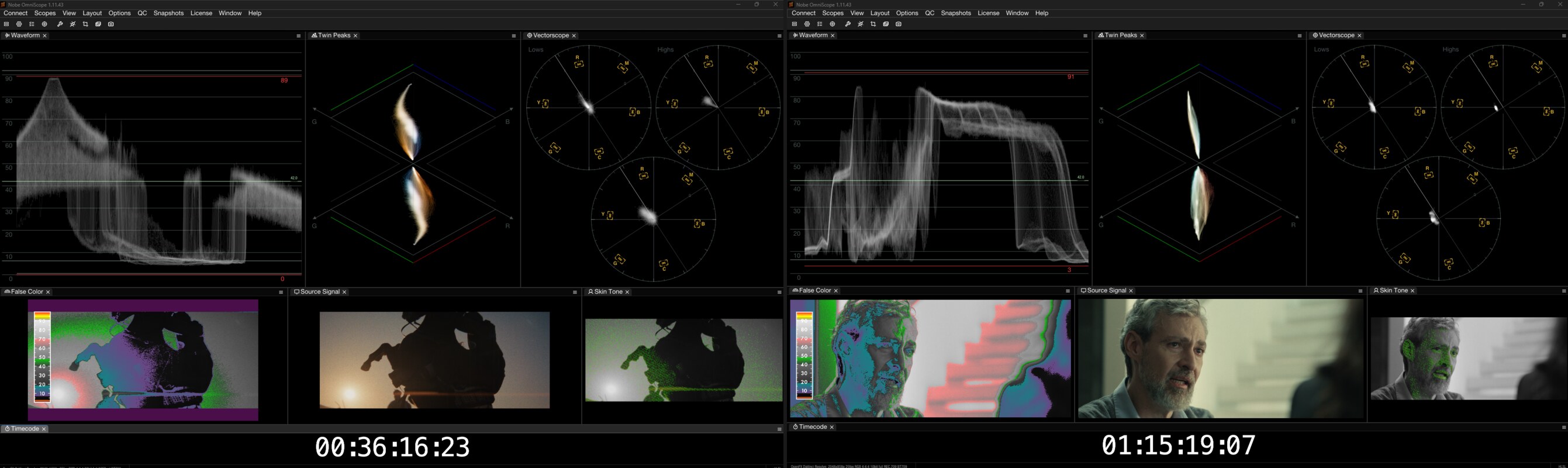 Chisco's OmniScope layout
Over the years, Chisco has learned that successful grading is about much more than technical knowledge.
His workflow begins with organization: developing a strong base look, working from a consistent node tree and using clip groups to maintain efficiency throughout a project. That structure becomes increasingly valuable when working to demanding schedules.
Looking back, one lesson stands above all others.
"I wish I'd learned earlier how to manage the technical side together with the artistic side."
Early in his career he was largely self-taught, learning through experimentation and, inevitably, mistakes. Those experiences proved invaluable, but meeting experienced professionals and learning from them accelerated his growth even further.
For anyone entering the industry today, his advice is refreshingly straightforward: practice constantly, build your own workflow, ask questions and never be afraid to make mistakes.
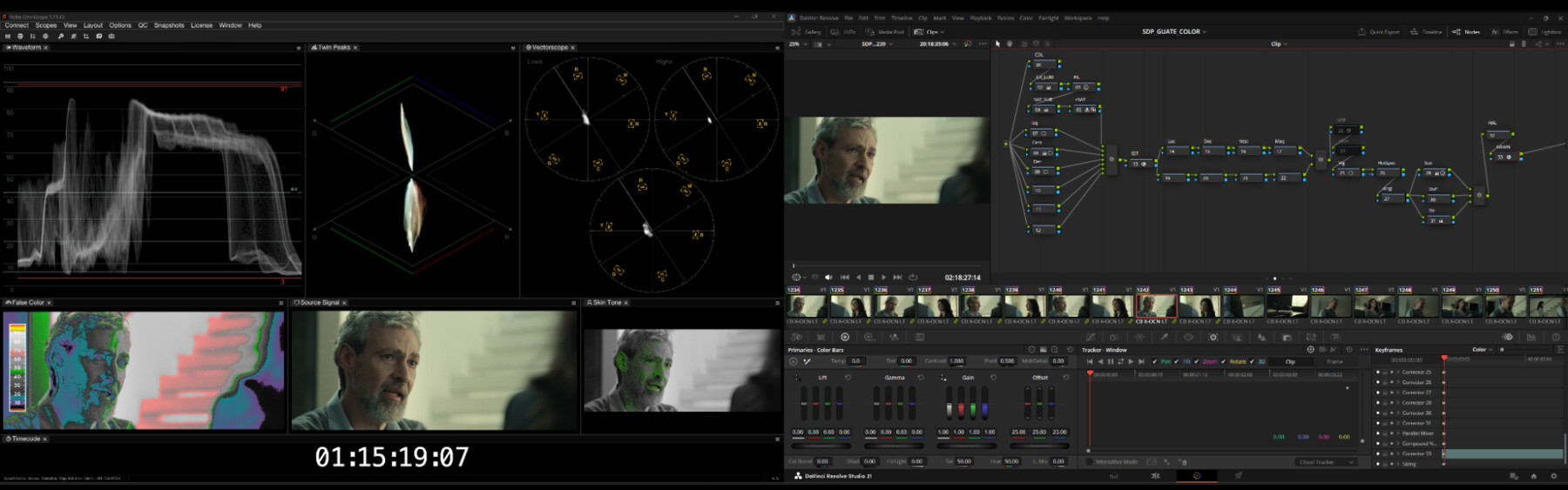 Nodetree working together with OmniScope
For Chisco, one of the biggest challenges facing colorists today isn't the technology; it's the pace of the industry. Audiences expect content faster than ever, and productions are under increasing pressure to deliver on tighter schedules. As a result, colorists must find ways to work more efficiently without compromising the creative process.
At the same time, he believes the industry has become more accessible than ever before. Professional grading tools are no longer limited to large facilities, educational resources are widely available, and experienced artists are increasingly willing to share their knowledge with the next generation.
For anyone starting out in color grading, his advice is simple: keep practicing.
"Practice, practice, practice. Don't take the easy path. Build your own workflow, ask everyone, don't be afraid to ask and to make mistakes. Know your tools, and later you can do anything you want."
Rather than finding shortcuts, he encourages aspiring colorists to develop their own process through curiosity, experimentation and repetition. Learning the technical side of grading creates the freedom to make stronger creative decisions later on.
Despite everything, the part of the job Chisco values most has remained the same throughout his career: collaboration. Sitting down with a director and cinematographer, exploring ideas together and gradually shaping the visual language of a film is what continues to motivate him.
For Chisco, the most rewarding moment comes at the end of that journey, when the team sees the finished work on screen and recognizes that every creative decision helped bring the story to life.
Throughout our conversation, one theme kept resurfacing: collaboration.
Whether developing looks during camera testing or refining the final grade in post-production, Chisco believes the strongest results come from building a shared visual language with directors and cinematographers from the very beginning.
"Normally we start with some reference, movies, books, pictures. I like this way of working, trying to see what their initial approach for the work was. After that we can work with confidence and the work becomes easier to do."
He considers camera tests one of the most valuable parts of the entire production, allowing creative decisions to be made long before final color begins.
Remote collaboration has also transformed the way he works, opening opportunities to grade projects across different countries and cultures. Those experiences have reinforced one important lesson: color is never universal. Cultural context shapes how audiences perceive color, making communication with filmmakers more important than ever.
Favorite film visually: Red Desert (1964) by Michelangelo Antonioni.
Favorite cinematographer: César Charlone.
A project you wish you could have graded: La Llorona by Jairo Bustamante.
Go-to visual references: Films, paintings, photography, and even poetry.
One tool you couldn't live without: Ripple Select Nodes, Group Clips and Log Wheels.





