September 23, 2026
Colorist Spotlight: Inside the Scope
From analog editing suites in Italy to a purpose-built grading studio in Sydney, Antonio has spent more than four decades working in post-production. Specializing in high-end color grading and finishing, he has worked across feature films, television dramas, commercials and music videos, developing a reputation for technical precision and collaborative storytelling.
With a focus on HDR, color science and advanced post-production workflows, Antonio shares his philosophy, creative process and the lessons that have shaped his approach to color grading, and why understanding the story will always come before the technology.
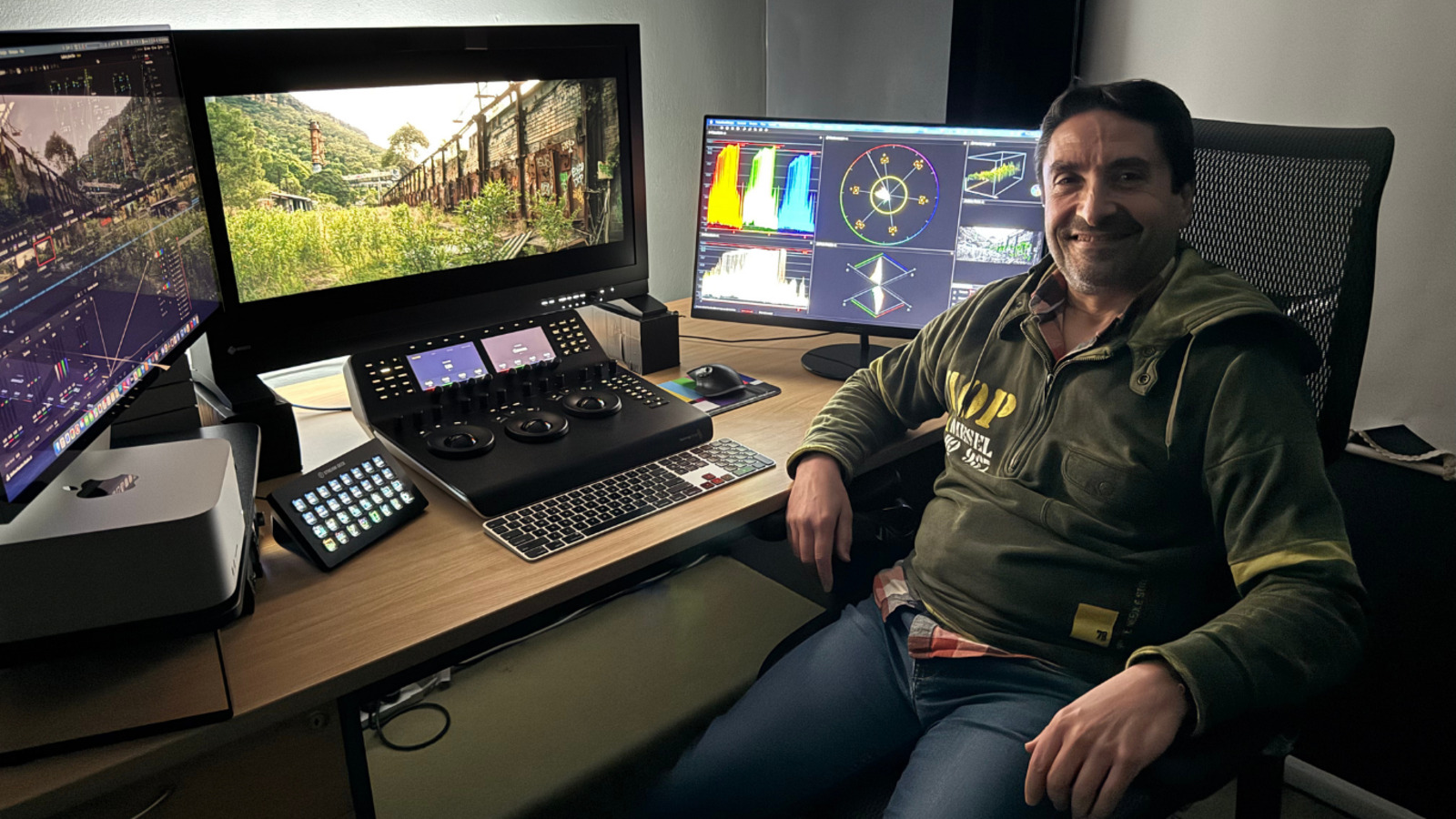
My career began in 1982 as a television camera operator at a small private TV station in the town in southern Italy where I was born.
I spent around two years there and learned an enormous amount. Because our team was so small, everyone had to be versatile and capable of handling every aspect of television production, from studio and ENG camera operation to video editing, sound, lighting and more. It was an incredible period of discovery that introduced me to a world I had never known before and sparked a lifelong passion for television and media production.
From there, I joined a small post-production company producing documentaries, news features for Italy's national broadcaster RAI and, above all, wedding films. I shot and edited countless wedding videos, which became another invaluable training ground for developing my creativity and storytelling skills. Around the same time, I also managed a VHS video rental store, combining my work with a lifelong passion for cinema that had been with me since childhood.
In 1992, I left my hometown and moved to Rome to continue developing my career. I joined a major post-production company, initially working as an assistant cameraman before transitioning into editing. Once again, it was an exceptional learning experience that really expanded my technical expertise.
A few years later, the era of non-linear digital editing arrived. I clearly remember working on one of the earliest versions of Avid, and it was an instant revelation.
"In a remarkably short time, I moved from operating expensive analog editing systems to editing on a computer using a non-linear digital timeline. At the time, this technology felt almost like science fiction."
As my career evolved, I gradually moved away from camera work and on-set production to focus exclusively on post-production, working across editing, compositing, motion graphics and visual effects.
My introduction to color correction came naturally as an extension of that journey. I began working on Quantel systems, including Editbox, Henry and Newsbox, remarkable platforms that offered tremendous creative freedom. While I carried out some color correction on those systems, my real passion for grading began with Final Touch, later acquired by Apple and renamed Color. That was the moment I truly discovered the fascinating world of color grading, at a time when digital color correction was still in its infancy.
In 2009, I was offered the opportunity to join one of Rome's largest production and post-production companies as a dedicated colorist using Autodesk Lustre, which they had recently acquired. During that time, I graded a wide range of television series, TV movies and music videos.
A few years later, together with our Head of Post-Production, we made the decision to transition to DaVinci Resolve. Since then, my career has been shaped by a continuous stream of rewarding projects, professional growth and creative collaborations.
In June 2017, I decided to relocate to Sydney, driven in part by the opportunity to embrace a new professional challenge. Taking on new challenges has always been a fundamental part of my philosophy, both personally and professionally. For the past several years, I have worked as a freelance colorist from my own professionally equipped grading suite in Sydney.
"My philosophy as a colorist is simple: to offer directors and cinematographers more than they expect when we begin discussing a new project."
I strive to enhance their creative vision while bringing my own experience and artistic perspective to every production. For me, the most rewarding collaborations are those built on trust, where we work together to create images that not only look beautiful but also serve the story.
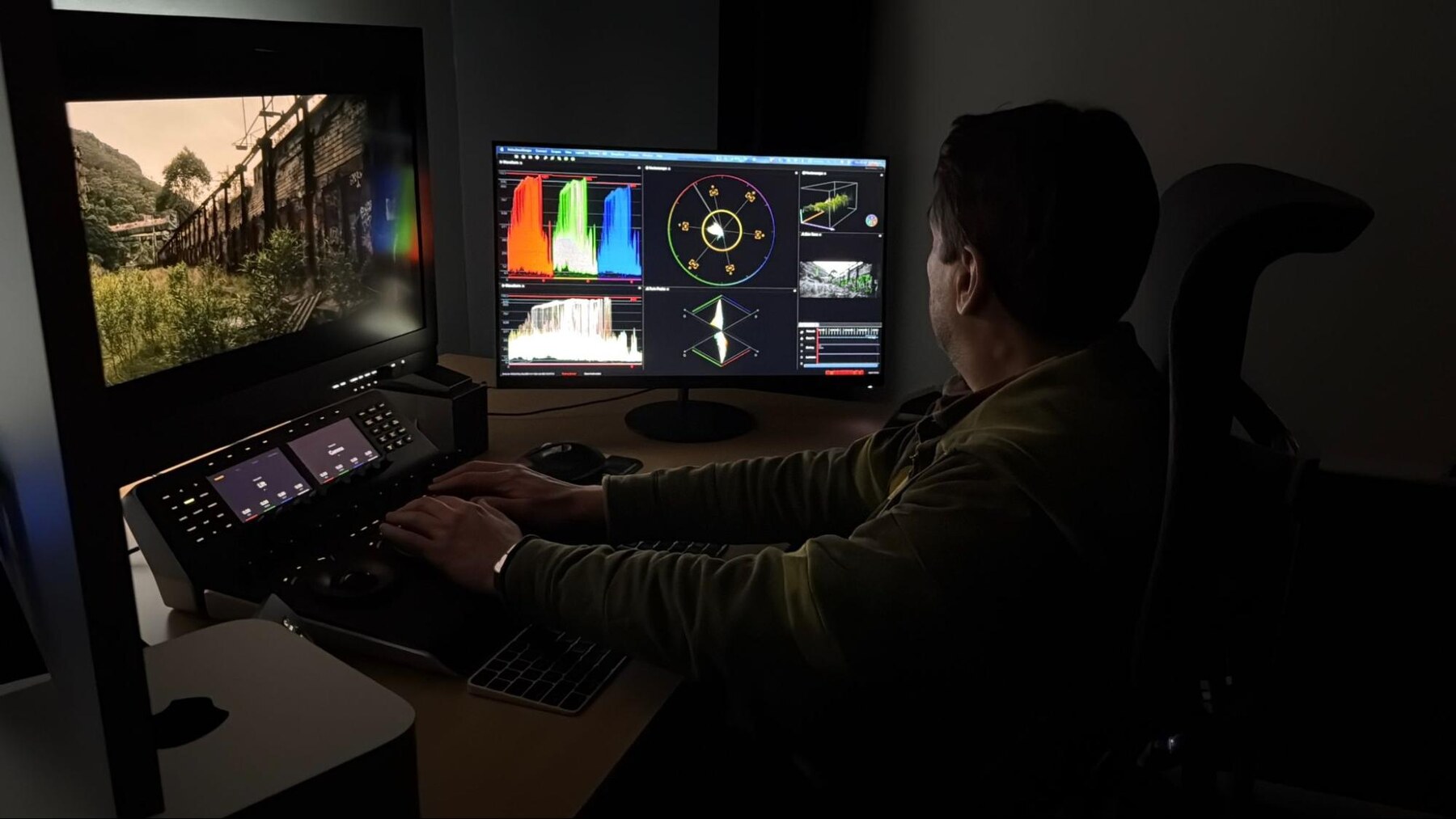
Looking back, there are many projects that I am particularly proud of.
One that stands out is Moon Rock for Monday, the first feature film I graded after moving to Sydney. It's a beautiful road movie, and I worked on it at a post-production facility shortly before the COVID-19 pandemic. I was given ten days to complete the grade, but because the film had been shot so well, I finished it in just nine.
The project represented a significant milestone in my career. I had only recently arrived in Australia and was starting from scratch, with no professional network and very little knowledge of the Australian film industry. Building a career in a new country became another rewarding challenge that I was determined to embrace.
 Moon Rock for Monday
Since then, I've had the privilege of grading a wide range of films, including Streets of Colour, Hostile Forces, From All Sides, Backlash, The Room Below, Lickerish, The Samoa Deal and Face, among many others.
Many of these were independent productions with modest budgets, often requiring creative and technical problem-solving throughout post-production. I have always enjoyed that aspect of the work: finding solutions that help filmmakers achieve the best possible result despite limited resources.
Short films have also played a significant role throughout my career. I've worked on nearly 200 of them, and each has presented its own creative opportunities and challenges. Among my favorites are LudoVic, Chasing the Sun, The Creek, Animus, Final Broadcast and Transitions.
 LudoVic
I've also had the opportunity to grade numerous commercials and music videos. One project that remains especially memorable is Sonic Mantra - Always, where I developed two distinctly different visual looks within the same production. It's still one of the projects I'm most proud of, both creatively and technically.
 Sonic Mantra - Always
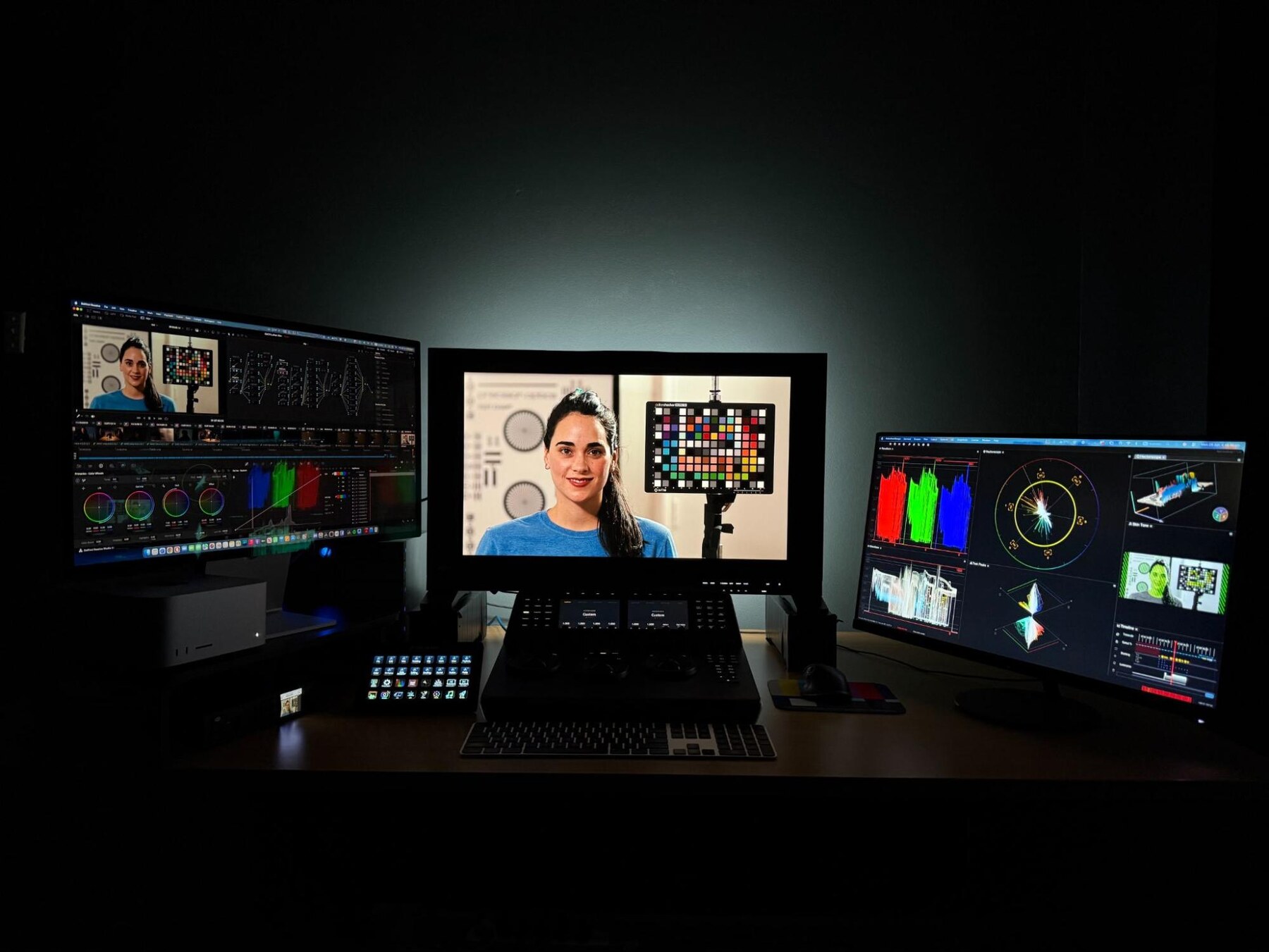
Over the years, I've built my grading suite around one simple principle: accuracy. Every piece of equipment has been carefully chosen to create an environment where I can make creative decisions with complete confidence.
At the heart of my workflow is DaVinci Resolve Studio 21, running on a Mac Studio Ultra M2 with 128 GB of unified memory. For control, I use a DaVinci Resolve Mini Panel alongside an Elgato Stream Deck XL, while video output is handled through a Blackmagic Design UltraStudio 4K Mini.
My reference monitor is an EIZO ColorEdge PROMINENCE CG3146 HDR display, professionally calibrated every six months. I've been extremely satisfied with its color accuracy and performance, and it's one piece of equipment I rely on every day.
While I always keep an eye on new technology and plan to upgrade my Mac Studio in the coming years, I believe the most important part of any grading suite isn't simply having the latest hardware. It's about creating a reliable environment where you can trust every creative decision you make.
One tool that quickly became indispensable is Nobe OmniScope. I fell in love with it from the very first day I started using it, and it has remained an essential part of my grading workflow ever since.
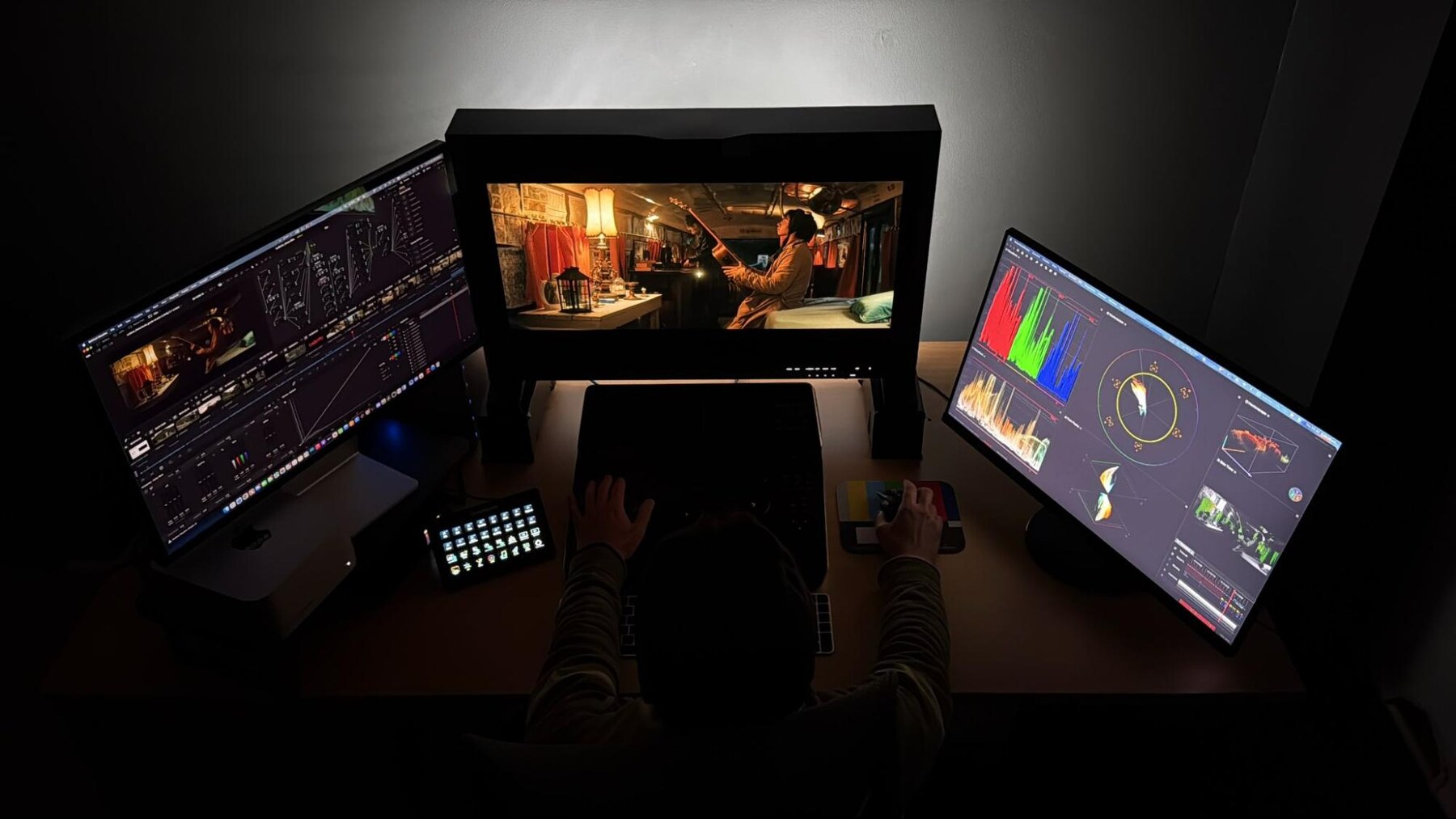 Antonio's grading suite
I rely first and foremost on my eyes and what I see on my reference monitor. For me, color grading always begins with the image itself. OmniScope serves as an essential validation tool, allowing me to confirm my visual judgments with accurate analytical data.
I first discovered OmniScope through YouTube videos by other colorists. It immediately caught my attention, so I spent time researching the software, reading technical articles and watching demonstrations to better understand its capabilities before introducing it into my own workflow.
It didn't take long for it to become an indispensable part of my grading suite. In fact, once I started using OmniScope, I stopped using DaVinci Resolve's built-in scopes altogether.
My workspace is built around the tools I rely on every day. The RGB Parade Waveform, Luminance Waveform and Vectorscope are always visible throughout my grading sessions, while Twin Peaks, Hectorscope, Skin Tone Scope and the CC Timeline are brought in whenever I need to analyze a particular aspect of the image in more detail.
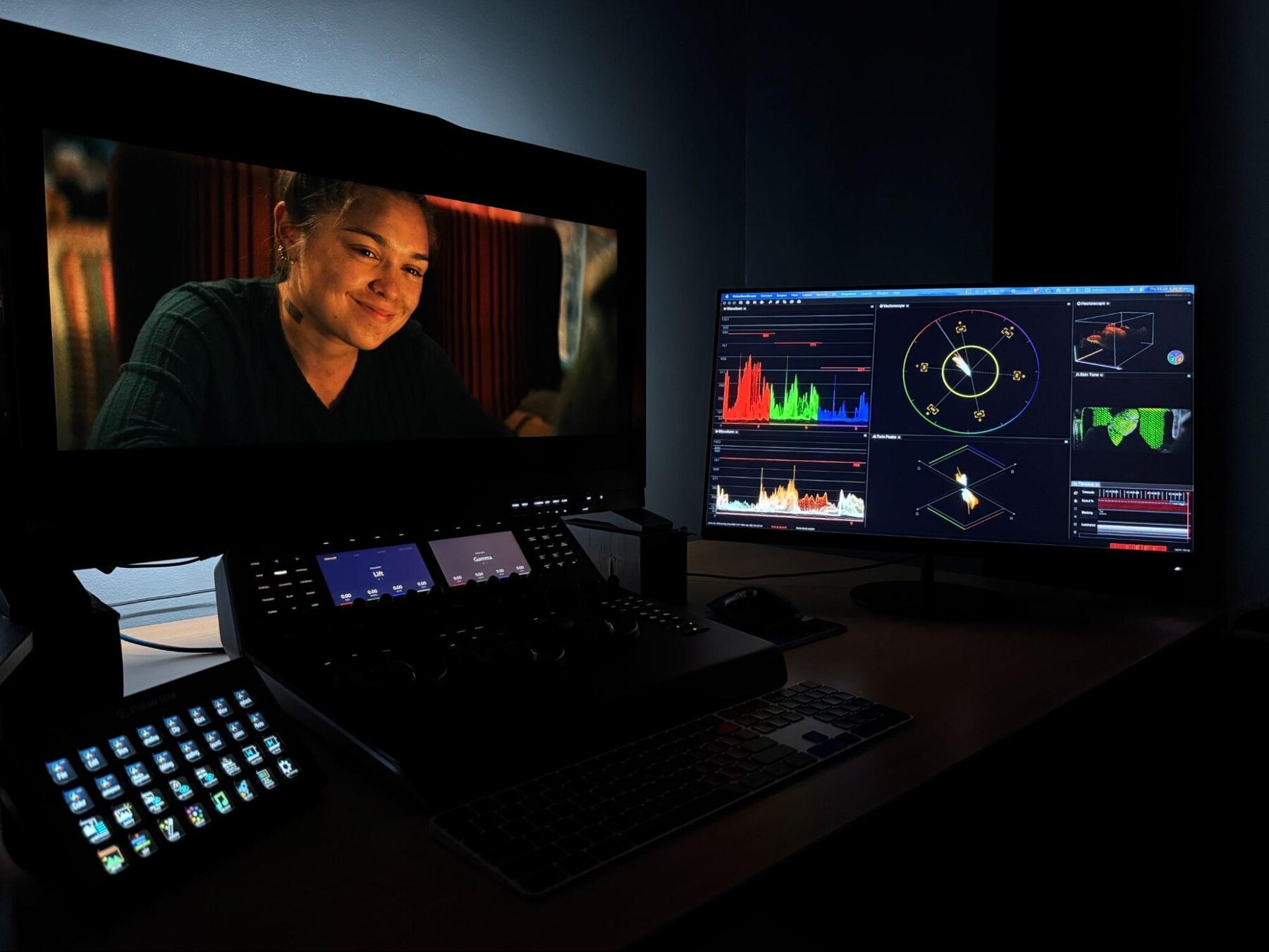 Working with Nobe OmniScope
"What impresses me most about OmniScope is its extraordinary level of customization."
Rather than adapting my workflow to fit the software, I can build exactly the workspace I need, with virtually no limitations. It easily adapts to the way I like to work, regardless of the project.
If I had to choose the tools I rely on most, it would be the RGB Parade Waveform and the Vectorscope. They are by far the most valuable and dependable scopes in my day-to-day work.
It's honestly difficult to think of what else could be added to OmniScope. The range of tools it already offers is incredibly comprehensive. If anything, I think I would simply need a larger monitor than my current 27-inch display to fit even more scopes on screen at the same time.
Every project begins the same way: with a conversation.
Before I even open DaVinci Resolve, I spend time with the director and cinematographer discussing their creative vision, the emotional tone they want to achieve and the overall visual language of the film. For me, understanding exactly what they want to create is the foundation of every successful grade.
From those conversations, I begin developing a custom LUT. I usually select the strongest close-up of the lead character and use it as the foundation, refining the look until it captures the mood we're aiming for. I then test it across the entire project to make sure it performs consistently under different lighting conditions and in every scene.
Once I'm happy with the look, I prepare a PDF presentation featuring representative stills, the proposed color palette and the overall visual direction. I consider this an essential step because it allows everyone to visualize the creative direction before grading begins, ensuring we're aligned from the very start.
My grading workflow is built around a fixed node tree that I continue to refine as my workflow evolves. Once the LUT has been approved, I begin the color grading process, usually completing at least three trim passes. After each pass, I share a review file with the director and cinematographer, incorporating their feedback until we're all happy with the final result.
Whenever possible, I also encourage my clients to visit my grading suite for the final review. Seeing the finished film on a professionally calibrated reference monitor gives everyone confidence that what they're approving is an accurate representation of how the film will appear in the cinema or on any properly calibrated display.
 Creating the LUT
One recent feature film put that entire workflow to the test. It was an almost zero-budget production shot in just seven days by two first-time cinematographers. The director practically pleaded with me to take on the project after the previous colorist had been unable to overcome the many issues created during production.
As soon as I opened the timeline, it was obvious why. The film had been shot on two Blackmagic cameras without any camera testing beforehand, and almost every shot varied in color, exposure and overall consistency.
This was probably the project where I relied most heavily on OmniScope. Its tools quite literally saved me many hours of additional work. The Vectorscope, in particular, allowed me to carefully balance every shot until the entire film shared a consistent visual language. Considering the material I started with, the final result exceeded everyone's expectations. The director thanked me repeatedly for helping save a project that meant so much to him.
When people ask whether I can fix problems created during production, I often joke that I feel like Mr. Wolf from Pulp Fiction: "I'm here to solve problems."
Fortunately, that's a role I genuinely enjoy.
 The Creek
Having worked through every major technological shift in post-production, I know that change is inevitable. The next major transformation will undoubtedly be artificial intelligence.
I believe one of the biggest challenges colorists will face in the coming years is the growing role of AI in the grading process. Whether it ultimately becomes a threat or a valuable creative tool remains to be seen. The reality will probably lie somewhere in between, depending on how we choose to use it.
"The future of AI is already here, and perhaps we have not yet fully realized just how much it will influence our industry."
I also believe HDR will continue to become the industry standard. More productions are now being finished in HDR, yet many directors and cinematographers still haven't experienced just how transformative it can be. The additional dynamic range, brightness and color reproduction can elevate an image in ways that are difficult to appreciate until you see it for yourself.
As for ACES, I believe it will continue to play an essential role in visual effects production. While I don't personally use it as the creative foundation for developing a grading LUT, I consider it an exceptional framework for VFX integration and maintaining a reliable color management pipeline between visual effects artists and colorists.
For anyone interested in entering the world of color grading, my advice is simple: watch as many films, television series and other visual productions as possible, and train your eyes to recognize their color language. Every project has its own visual identity, carefully crafted to support the story, and learning to recognize those creative choices is one of the most valuable skills an aspiring colorist can develop.
Today, learning has never been more accessible. Platforms like YouTube offer an incredible opportunity to study the workflows and techniques of experienced colorists, providing a strong foundation before experience takes over.
The most important lesson, however, is that becoming a successful colorist takes time. It requires patience, years of practical experience and a genuine artistic sensibility. While the technical aspects of color grading can certainly be taught, developing the creative judgment that defines an accomplished colorist is a far more personal journey.
Ultimately, color grading is as much about artistic interpretation and visual intuition as it is about technical expertise. Every colorist sees the world a little differently, and that unique perspective is what makes the craft so endlessly fascinating.
 From All Sides
Favorite film visually: Just to name a few: Se7en, The Book of Eli, The Road, Dune, Avatar, Raised by Wolves, Barry Lyndon, and many others.
Favorite cinematographer: Vittorio Storaro, Darius Khondji, Claudio Miranda, Steve Yedlin, Janusz Kaminski, Roger Deakins, Lawrence Sher, and many more.
A color grade you wish you'd worked on: Once Upon a Time in Hollywood.
One piece of gear you couldn't live without: Monitor.
Most underrated grading tool: Working in linear mode.

