May 6, 2026
Inside the Scopes:
Iain Pennington is an Edinburgh-based independent colorist working across commercial, narrative, and long-form projects with clients across the UK and internationally. He splits his time between grading for his own clients and assisting some of Europe's leading colorists; something he sees as a key part of continuing to learn and grow in the craft.
His approach to grading is very much eye-led, balancing instinct and taste with technical precision. Whether it's the detail-driven world of commercial work or the fast-paced demands of long-form, Iain brings a thoughtful and emotionally driven approach to everything he works on.
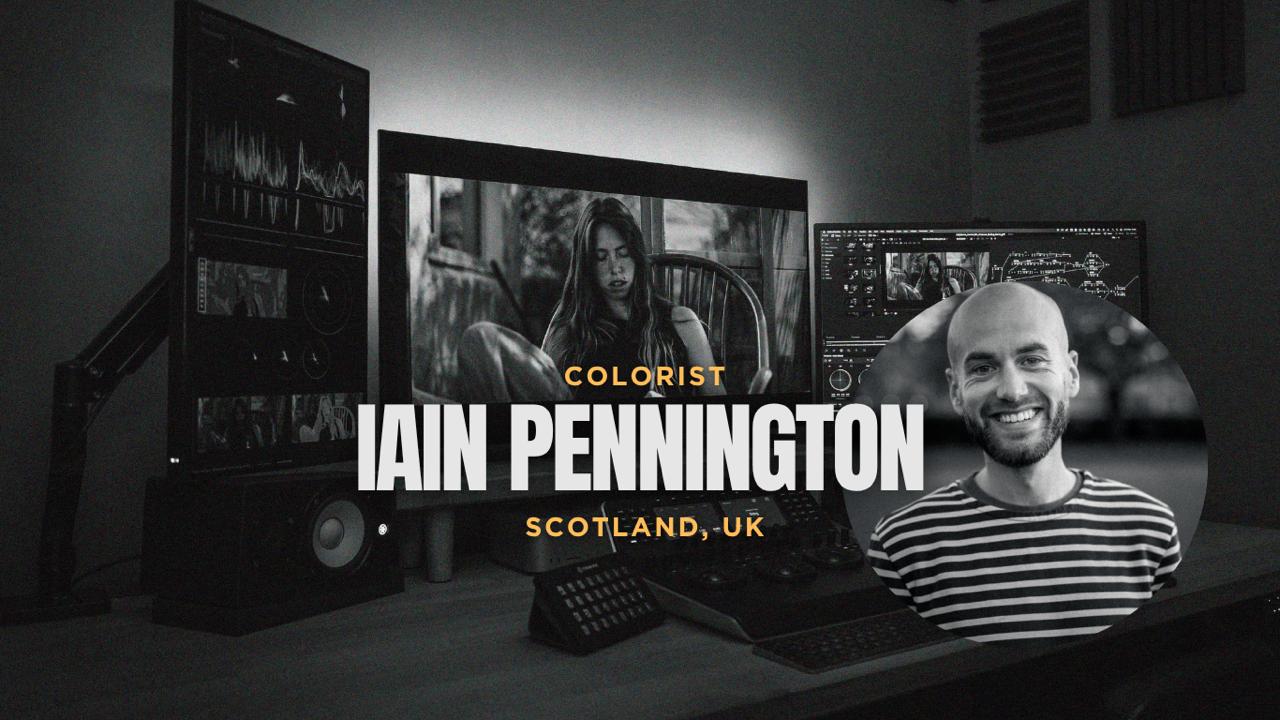
I'm Iain Pennington, an Edinburgh-based independent colorist. I work out of my studio in the south of the city, offering in-person grading sessions as well as color-critical remote workflows for clients across the UK and internationally.
My journey into color grading started in a pretty unusual place: food. I was a chef and co-owned a sustainable fine dining restaurant in the UK with my brother. During that time, I fell in love with photography and started investing any spare time and money I had into learning how to capture light.
What really drew me in, though, was post-production. There was something about shaping the image after the shoot that completely fascinated me. Learning high-end retouching took a huge amount of my time during days off and even on admin days, retouching images from food shoots we'd done for socials and the website.
A few years later, we worked with a cinematographer to film the restaurant, and that was the moment it clicked; what he was doing with moving image felt like everything I loved about photography, just on a much bigger and more technically demanding level. That's where my interest in color grading really began.
For years it stayed in the background as a hobby. I'd grade on my days off, watch tutorials, shoot poor quality footage on my mirrorless camera; just learning bit by bit. I never seriously thought I'd pursue it as a career, but after about seven years, it had grown into something I couldn't ignore anymore. I left the restaurant after 12 years to fully commit to becoming a colorist.
Since then, I've been fortunate to be mentored by some of the best colorists and color scientists in the industry. Today, I run a busy grading practice and split my time between my own client work and assisting high-end colorists across Europe, which I still see as a huge part of continuing to learn and improve.
In terms of the work itself, I cover a wide range of projects. I've thought about specializing, but I genuinely enjoy the variety. Commercial work lets me really focus on detail and finesse, while long-form projects push me to be efficient and constantly refine my workflows. They're very different challenges, but both are incredibly rewarding.
 The Correction Unit
It's always difficult to narrow this down, as I've been lucky to work on a lot of projects I genuinely care about. This is one of the joys of being independent.
A big milestone for me was my first "proper" feature film, The Correction Unit (2025). It had a run on Apple TV and is now available on Amazon Prime. Building the look for that sci-fi world was a really rewarding experience and a huge step forward for me professionally.
More recently, I've worked on a number of short films that really stood out. Standing On The Bridge is a narrative project based on true events, created to raise awareness around domestic abuse. Another is Little Wing, a beautifully shot and very moving story exploring grief, loss, and miscarriage.
Alongside narrative work, I've also graded a range of commercial campaigns, including TVCs for Alzheimer's Society and Sky Sports, as well as global skincare, gymwear, and consumer brands.
That mix of projects is something I really value. The variety keeps things interesting and constantly pushes me to adapt; whether that's refining a very precise commercial look or working more fluidly across longer-form storytelling.
 Little Wing
My current system is built around an M1 Ultra, which has been a solid workhorse for the past few years. I'm starting to look at upgrading soon, with plans to keep the M1 as a dedicated render machine when juggling multiple projects.
I'm running DaVinci Resolve 20, paired with:
For monitoring:
Audio comes through Yamaha HS5 speakers, and everything sits on a 2.5m beech worktop mounted on a Flexispot standing desk, complete with a treadmill for walking sessions.
Yes… I am one of those people.
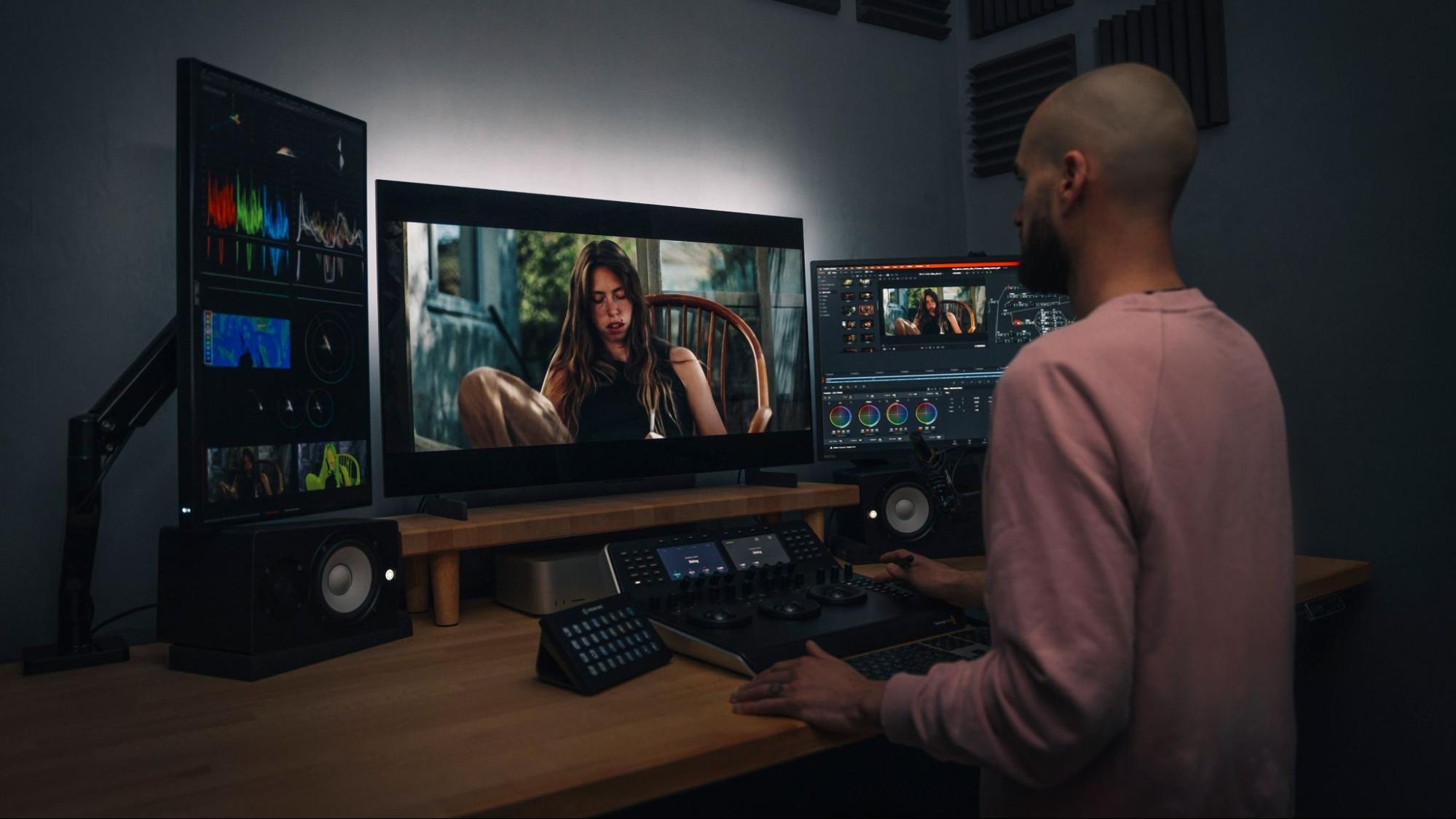
I appreciate the irony given this feature, but scopes are actually the last thing I look at.
I trust my eyes, my taste, and my reference monitor first. I'll place exposure and color where it feels right creatively, rather than allowing my scopes to tell me where the signal "should" fall.
Where scopes come into their own for me, especially OmniScope, is when something doesn't feel right and I can't immediately put my finger on it.
That's when I turn to:
They're my problem-solving tools, helping me diagnose subtle issues in exposure, balance, or skin tone that aren't immediately obvious.
 Renno
RennoOmniScope fits into my workflow as a precision tool for validation and problem-solving.
I rely on it when:
Key tools I use:
What stands out to me is the flexibility; being able to isolate specific parts of the image and analyze them in detail is incredibly powerful, especially in client-facing situations.
It hasn't replaced my eye, but it absolutely reinforces my confidence when decisions are questioned.
 Making Marks
A recent project really brought this into focus.
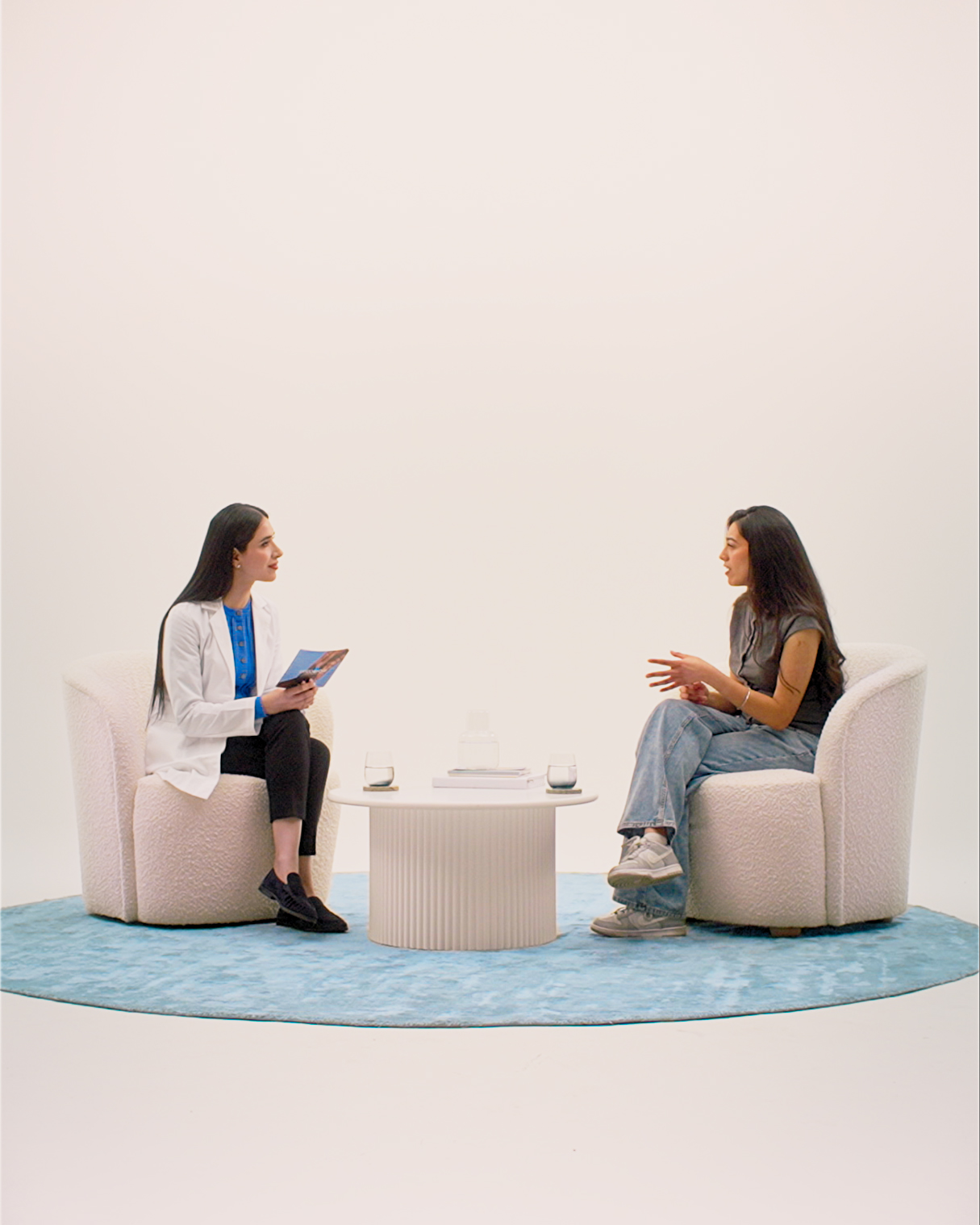
I was grading a six-part campaign for a global skincare brand. All shot in the same room, with the same lighting setup and interview format. On paper, it should have been straightforward. In reality, it was anything but.
The main issue was a key prop: a rug the client was very particular about. It was meant to be a vibrant sky blue, but in-camera it came through as a flat, neutral gray. On top of that, the white background had clipped, and the chairs were bleeding into it; not exactly an ideal starting point.
After a fair bit of rotoscoping across all six films, dealing with different interviewees, movement, and constantly shifting shapes, I was able to bring the rug back to the rich blue the client expected.
Once we landed on a version that felt right, I assumed the rest would fall into place. But despite the shots matching visually, the client felt the color was inconsistent across different angles.
That's where OmniScope became essential.
Using a custom vectorscope target and isolating the rug within the scope, I could clearly see that hue and saturation were perfectly aligned across every shot. It confirmed what I was already seeing, but more importantly, it gave me a way to communicate that clearly and objectively.
The same happened with contrast. There were concerns that levels were shifting between shots, but by zooming into the RGB parade and focusing on the black and white values, I could show that everything was matching exactly.
Once the client can see that everything is perfectly matched, we can allow the conversation to open around perceptual changes; how your eye is influenced based on the flow of the film. Everything was technically perfect, but now we could break free from what was 'technically perfect' and start feeling what was right for the film based on flow. OmniScope gives me confidence when my judgment is under scrutiny and also gives the client reassurance when we're dealing with the nitty gritty of the grade.
What I love most about this craft is its emotional impact.
I've genuinely been moved to tears by color grading, and continue to be. Whether in films or even short commercials. If a grade is right, it connects with something really profound.
The biggest challenge today is balancing that creative intent with increasingly tight timelines, tighter budgets and technical demands.
Advice for newcomers:
There are no shortcuts; and that's part of what makes it worthwhile.
Favorite film for its color grade: The Holdovers. I sat in the cinema watching this when it came out thinking "this was 100% shot on film, all of this is so stunning". It was not; and my mind is still blown.
Resolve feature I couldn't live without: "Ripple To Selected Clips". I use it all the time. That, and multiple playheads.
If I weren't grading: I'd maybe want to open a coffee shop selling specialty coffee and make my own artisan chocolates to sell on the counter. That, or I'd pursue my passion of pottery and try to turn that into a living. Honestly though, I'm so in love with this craft and I see the improvement colorists at the top of their game are still making that I don't see these ever becoming a reality.
 Healing Ground
