April 30, 2026
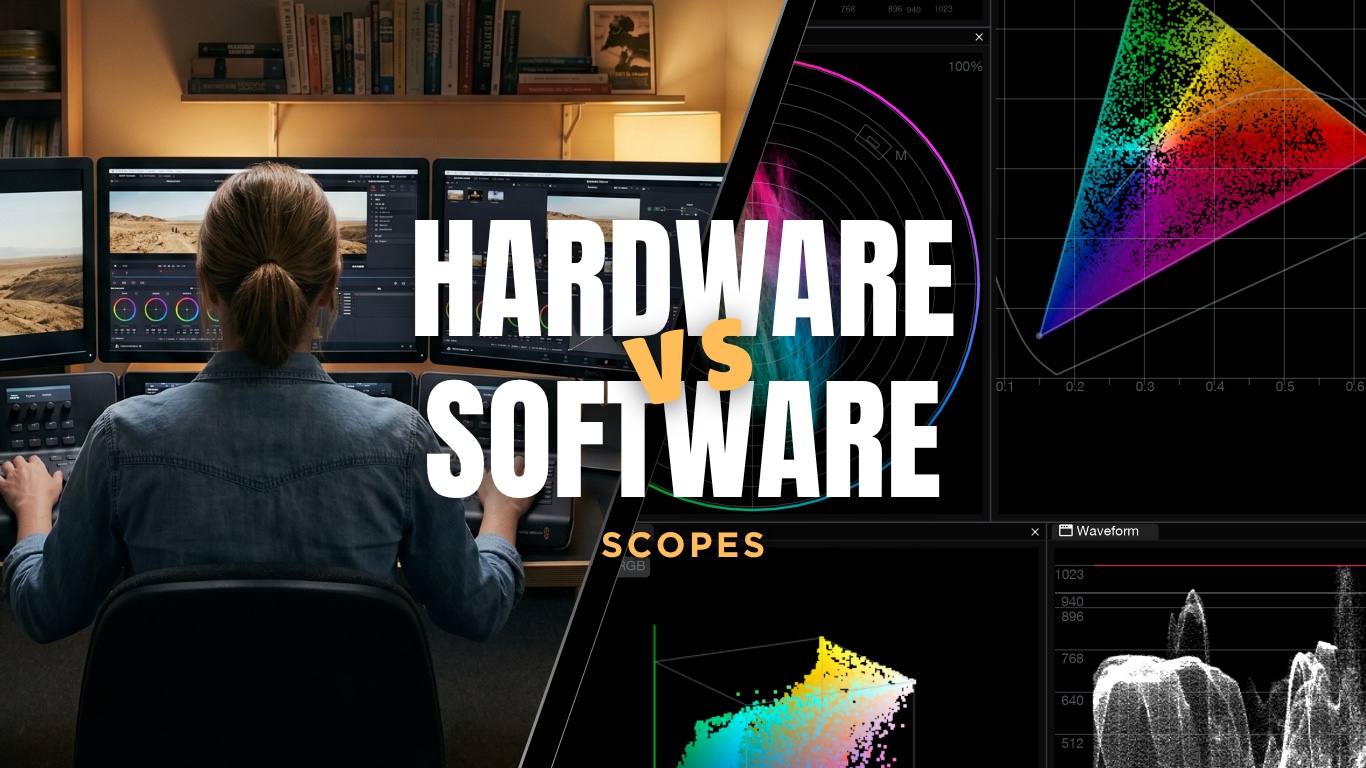
Scopes have always been at the core of professional color work. Whether you're grading a feature or monitoring on set, they provide the objective view that your eyes alone can't.
But as workflows evolve, one question comes up more and more:
Should you be using hardware scopes or software scopes?
The answer isn't as straightforward as it used to be.
At their core, both hardware and software scopes do the same thing: they analyze your image signal and give you accurate insight into exposure, color balance, and signal integrity.
The real difference is about where and how that analysis happens.
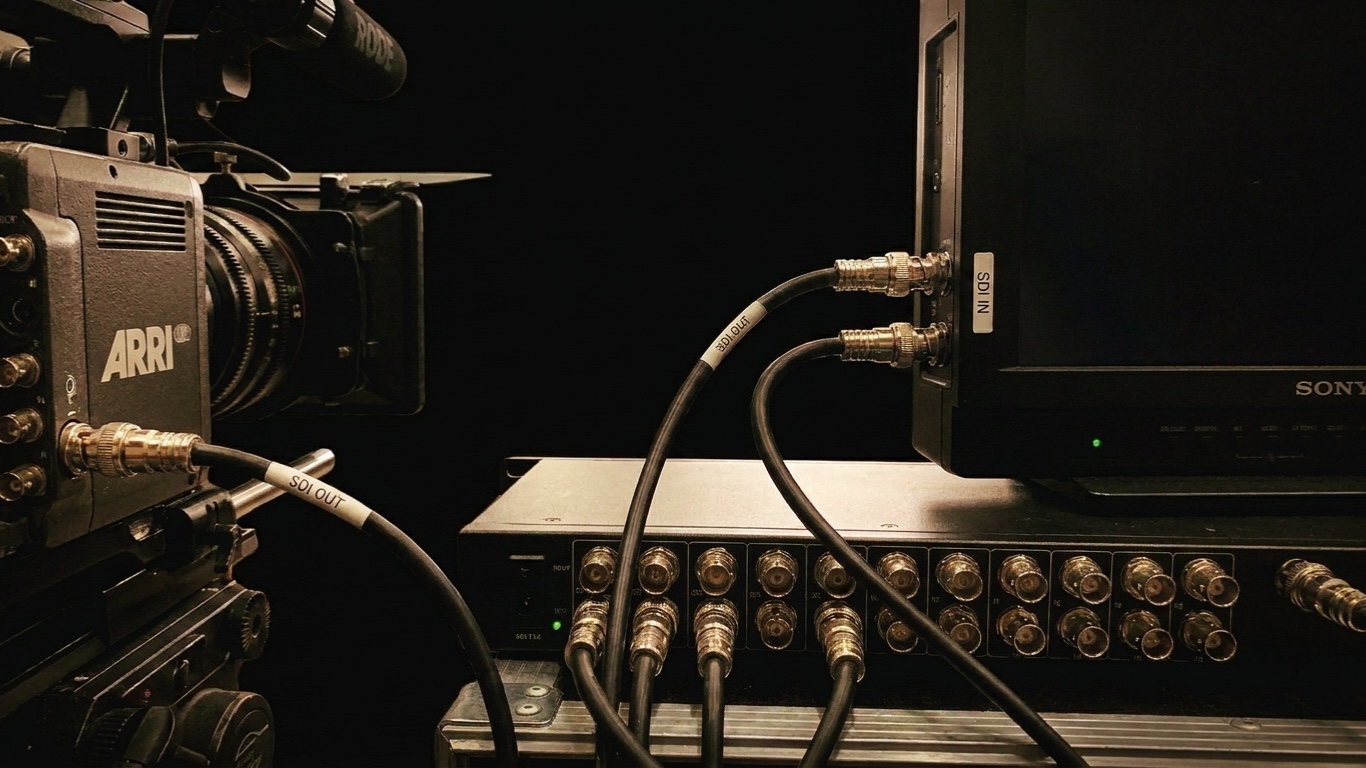
Hardware scopes are dedicated external devices that analyze a video signal — usually via SDI — completely independent from your workstation. They've long been considered the standard in broadcast and high-end post-production environments.
Why professionals rely on them:
But they come with trade-offs:
Software scopes run on your machine (or alongside it), analyzing either the image pipeline directly or a video signal fed through I/O hardware. Over the last few years, they've evolved significantly — both in accuracy and capability.
Why they're gaining traction:
Software scopes are no longer just a "convenient alternative". They've become a core part of many professional workflows.
Accuracy is where the old assumption gets turned on its head.
Hardware scopes were long considered the gold standard because they read the SDI signal directly, outside of your system. But that signal is already a compromise: typically 10-bit Y'CbCr 4:2:2, chroma-subsampled, quantised, and gamma- or PQ-encoded before it ever leaves your I/O card. A hardware scope can only ever be as precise as the cable feeding it.
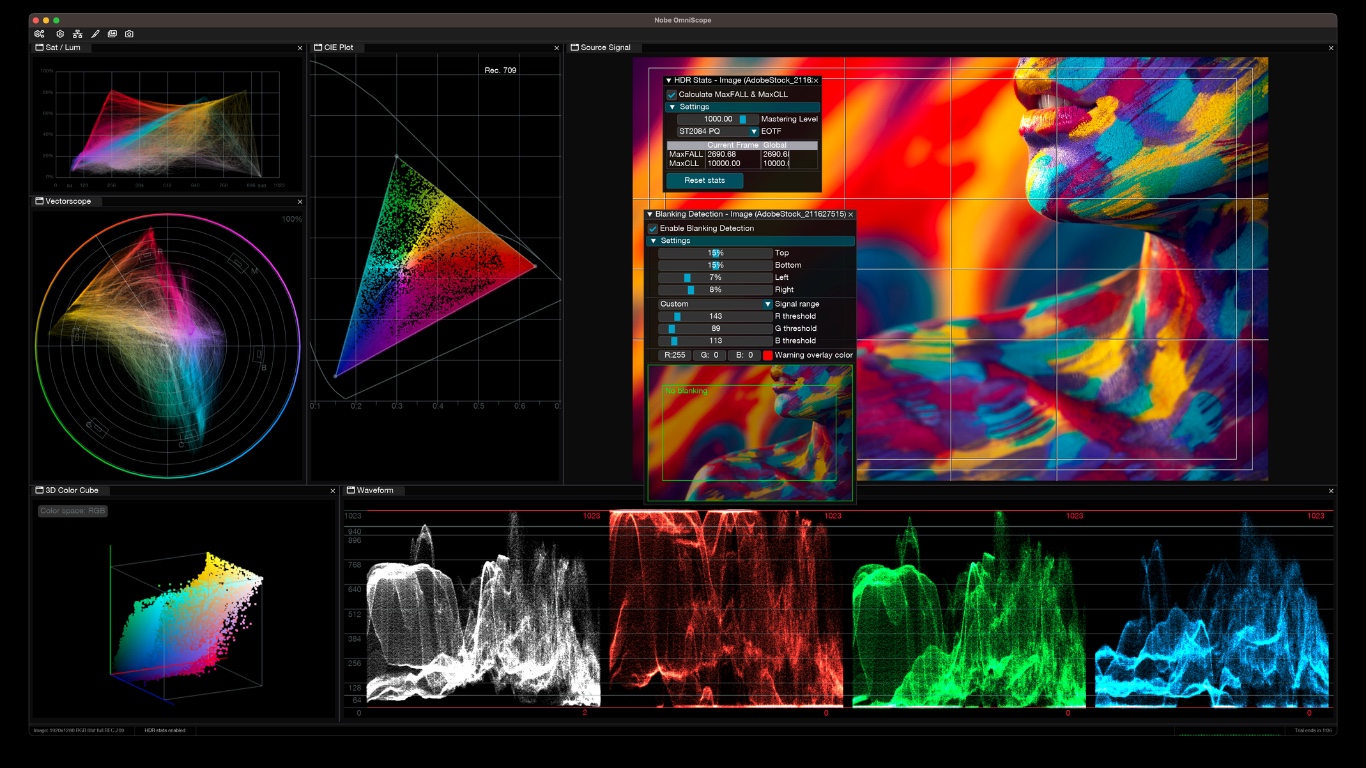
Modern software scopes don't have that ceiling. When OmniScope reads directly from the application's GPU framebuffer, it sees the image before the SDI downconversion: full-resolution RGB 4:4:4, often in floating-point precision, with no chroma subsampling and no encoding loss.
That difference matters most exactly where it counts:
Hardware scopes still have a place — particularly for QC of the exact signal leaving your facility. But for upstream monitoring during grading, dailies, and finishing, software scopes reading the float pipeline aren't just as accurate as hardware. They're often more accurate.
The rise of:
…has changed what professionals need from their tools.
Scopes are no longer just a final-check tool — they're part of the entire pipeline, from capture to delivery.
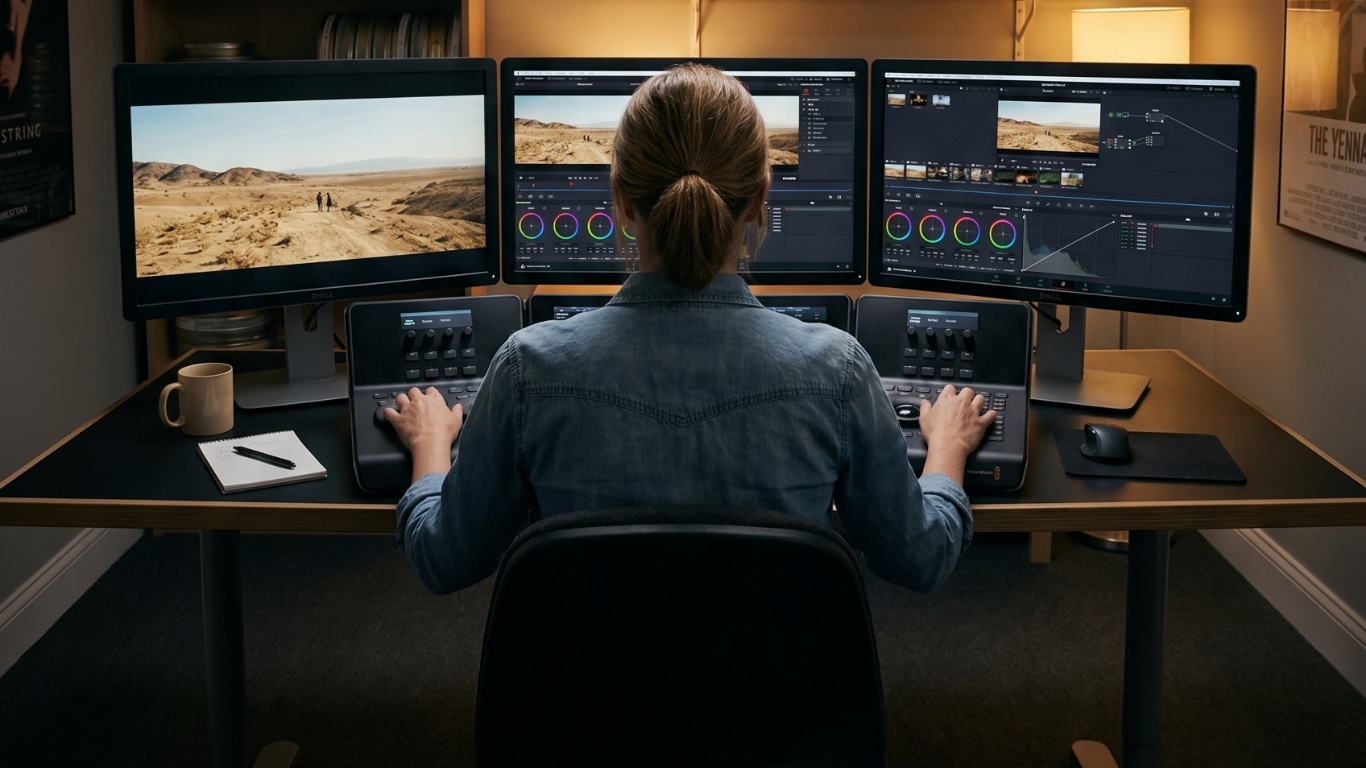
The conversation is no longer about hardware vs software — it's about how each fits into your workflow.
With Nobe OmniScope, we're giving colorists and image professionals the clarity and confidence to make better decisions, whether you're checking PQ peaks against a 1000-nit deliverable, validating Rec.2020 gamut on a P3 master, or comparing two streams side-by-side from anywhere.

